
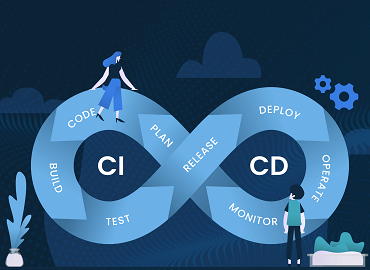
Today, CI/CD pipelines have become an invaluable asset in the rapidly evolving software development industry, wherein agility and efficiency are especially crucial. These pipelines typically guarantee the timely and consistent deployment of code changes while maintaining software quality and stability. However, to properly improve the CI/CD process, effective test automation technologies must be smoothly integrated. Here are seven efficient approaches for seamlessly incorporating test automation technology into CI/CD operations.
Streamlining Test Execution Automatically
Firstly, note that automated test execution plays a major role in integrating test automation technologies into CI/CD processes. Ideally, development teams can quickly assess codebase changes by automating test suites, preventing problems or regressions arising from new features. Test automation software simplifies the process, resulting in faster test execution across many environments.
Harmonizing with Version Control Systems
Businesses may maintain version history and monitor changes more efficiently by integrating test automation tools with version management systems like Git. Moreover, by syncing test scripts with code repositories, developers can guarantee that tests are always in sync with the most recent codebase. This allows effortless collaboration and version control.
Accelerating Testing through Parallelization
Parallel test execution is critical for accelerating the testing process. Test automation software enables teams to run several tests concurrently, dramatically lowering test execution time. Organizations may speed up their CI/CD pipelines while maintaining test coverage and quality using parallel testing’s scalability and efficiency.
Establishing Continuous Feedback Mechanisms
For iterative software development to truly work, you must create a constant feedback loop. Test automation software generally provides developers with immediate feedback on code change efficiency, allowing them to detect and fix problems quickly. Adding feedback mechanisms to CI/CD pipelines may promote a continuous improvement culture that leads to increased creativity and quality.
Seamlessly Integrating with Test Management Platforms
Integrating test automation tools with test management systems improves test orchestration and traceability. Test cases, requirements, and defects may be synchronized to ensure consistency in testing operations from planning to execution. This integration streamlines test management procedures, enabling teams to prioritize, monitor, and analyze testing activities more effectively.
Ensuring Compliance and Regulatory Conformity
Ensuring compliance with industry standards is critical for software firms. Test automation software makes compliance testing easier by automating the validation of regulatory criteria and standards. Organizations with compliance testing in their CI/CD pipelines may show regulatory conformance, reduce compliance risks, and inspire trust in stakeholders and customers.
Automating Security Assessments
Note that test automation software can execute security tests, including vulnerability scanning and penetration testing. Businesses that include security testing in their development lifecycle may proactively discover and solve security issues, lowering the risk of breaches and data compromises.
Environment Provision and Management
Consistent testing settings are critical for producing accurate and repeatable test findings. Test automation software includes environment provisioning and administration tools, allowing teams to create, configure, and deploy test environments on demand. Businesses that automate environment settings may reduce bottlenecks and ensure consistency throughout the CI/CD process.
Integration with Build Tools
CI/CD pipelines become more efficient when linked with popular build tools such as Jenkins or Travis CI. Test automation software may be integrated into current build processes to run automated tests when code changes or builds are completed. This connection improves the process, allowing for continuous testing and deployment with minimum human interaction.
Focusing on User Behavior with BDD
Behavior driven development (BDD) methodologies promote cooperation and coordination among stakeholders, testers, and other relevant individuals. Cucumber and SpecFlow are examples of test automation software that support BDD frameworks and promote the generation of executable specifications that align with business needs. BDD integration in CI/CD pipelines allows businesses to guarantee that software features are created and tested with clarity and accuracy.
Conclusion
Including test automation tools in CI/CD pipelines is vital for current software development methods. With the help of the above-mentioned approaches, businesses may improve the speed, efficiency, and quality of their CI/CD operations. Leveraging technologies like ACCELQ, a premier cloud-based continuous testing platform, allows teams to improve their testing skills and accelerate their path to seamless software delivery.
It is critical to note that effective integration of test automation technologies into CI/CD pipelines requires not just shortening the development cycle but also guaranteeing that each code change satisfies the highest quality and reliability criteria. With the proper tools and procedures, teams can confidently and quickly accomplish continuous integration and delivery.
https://www.hometownstation.com/featured-stories/integrating-test-automation-software-into-ci-cd-pipelines-512980a>