
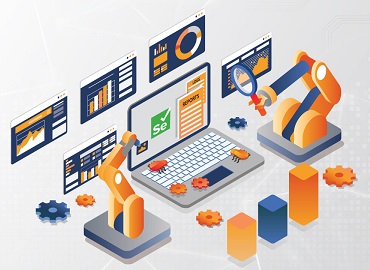
Selenium is a robust tool that enables the automation of web browsers through programming. It is compatible with all popular browsers and operates on all major operating systems. Additionally, Selenium scripts can be written in multiple programming languages, including Python, Java, and C#.
In an agile development setting, developers place a high value on quickly implementing changes. When making modifications to a front-end component, they need to conduct cross-browser testing. As web applications continue to expand in terms of technology and functionality, automated testing is essential for ensuring that these features and the user interface are working effectively.
What is Selenium?
Selenium is a free, open-source automation testing framework designed for web applications. It is lightweight and supports multiple browsers, including Safari, Firefox, Chrome, and Internet Explorer. With Selenium, you can automate web browser interactions, simulating actions such as clicking links, filling out forms, and making purchases on a website.
Selenium is often used in conjunction with other software testing tools, such as JUnit or TestNG, to create comprehensive automated tests for web applications. Additionally, Selenium can be utilized to test the functionality and performance of web applications, as well as to generate reports or scrape data from websites.
One of the key advantages of Selenium is that it is an open-source technology, meaning there are no license fees associated with its use. Other factors that contribute to its growing popularity include the ability to write test scripts in a variety of programming languages, such as Python, Java, Ruby, C#, Perl, PHP, and .Net, and support for three operating platforms: Windows, Mac, and Linux. Additionally, Selenium supports continuous testing through integration with tools such as Jenkins, Maven, and Docker.
What is Python?
Python is a widely utilized computer programming language that is commonly employed for building websites and software, automating tasks, and conducting data analysis. It is a general-purpose language, which means it has the ability to create a wide range of programs and is not limited to solving specific problems. Its versatility, combined with its ease of use for beginners, has established Python as one of the most popular programming languages in use today.
Selenium Python Bindings
Python is a great choice for automating web browser testing due to its Selenium bindings, which allow for easy control of WebDrivers. With Python Selenium example code available online, you can quickly create reliable tests with minimal code.
Selenium Python bindings refer to the APIs that allow you to write functional tests using Selenium WebDriver in the Python programming language. With these APIs, you can interact with the WebElements in the application under test (AUT).
These bindings support both local browser drivers such as Chrome, Firefox, and Internet Explorer as well as a remote WebDriver that enables you to connect to a remote Selenium Grid in the cloud. In this way, the Selenium Python bindings provide a convenient and efficient means of testing web applications.
LambdaTest is a cloud-based cross-browser testing platform that allows developers and testers to perform automation testing and manual testing on web applications and websites. It provides a scalable cloud infrastructure that allows users to test their web applications on different operating systems, browsers, and mobile devices.
LambdaTest provides integration with Selenium and supports Selenium Python bindings, which allows you to run your automated test scripts on a cloud-based Selenium Grid. With this integration, you can execute your Selenium Python test scripts on multiple browser and operating system combinations simultaneously.
Here are some of the ways in which LambdaTest helps with Selenium Python bindings:
- Cross-browser testing: LambdaTest allows you to perform cross-browser testing on a wide range of browsers, including Firefox, Chrome, Safari, Internet Explorer, and Edge, among others. This helps to ensure that your web application is compatible with different browsers and operating systems.
- Parallel testing: LambdaTest enables you to run multiple Selenium Python tests in parallel, which can significantly reduce the time it takes to execute your test suite.
- Smart testing: LambdaTest provides an AI-based testing tool that can help you to identify and prioritize the most critical issues in your web application. This can save you time and effort by allowing you to focus on fixing the most important issues first.
- Integrations: LambdaTest integrates with popular testing frameworks and tools, including Selenium, PyTest, and Jenkins. This allows you to easily integrate your existing test scripts and workflows with LambdaTest.
Overall, LambdaTest provides a cloud-based testing platform that simplifies and streamlines the process of testing your web application with Selenium Python bindings. It helps you to identify issues earlier in the development cycle and ensures that your web application works as intended across different browsers and operating systems.
Selenium is a robust tool that enables the automation of web browsers through programming. It is compatible with all popular browsers and operates on all major operating systems. Additionally, Selenium scripts can be written in multiple programming languages, including Python, Java, and C#.
In an agile development setting, developers place a high value on quickly implementing changes. When making modifications to a front-end component, they need to conduct cross-browser testing. As web applications continue to expand in terms of technology and functionality, automated testing is essential for ensuring that these features and the user interface are working effectively.
What is Selenium?
Selenium is a free, open-source automation testing framework designed for web applications. It is lightweight and supports multiple browsers, including Safari, Firefox, Chrome, and Internet Explorer. With Selenium, you can automate web browser interactions, simulating actions such as clicking links, filling out forms, and making purchases on a website.
Selenium is often used in conjunction with other software testing tools, such as JUnit or TestNG, to create comprehensive automated tests for web applications. Additionally, Selenium can be utilized to test the functionality and performance of web applications, as well as to generate reports or scrape data from websites.
One of the key advantages of Selenium is that it is an open-source technology, meaning there are no license fees associated with its use. Other factors that contribute to its growing popularity include the ability to write test scripts in a variety of programming languages, such as Python, Java, Ruby, C#, Perl, PHP, and .Net, and support for three operating platforms: Windows, Mac, and Linux. Additionally, Selenium supports continuous testing through integration with tools such as Jenkins, Maven, and Docker.
What is Python?
Python is a widely utilized computer programming language that is commonly employed for building websites and software, automating tasks, and conducting data analysis. It is a general-purpose language, which means it has the ability to create a wide range of programs and is not limited to solving specific problems. Its versatility, combined with its ease of use for beginners, has established Python as one of the most popular programming languages in use today.
Selenium Python Bindings
Python is a great choice for automating web browser testing due to its Selenium bindings, which allow for easy control of WebDrivers. With Python Selenium example code available online, you can quickly create reliable tests with minimal code.
Selenium Python bindings refer to the APIs that allow you to write functional tests using Selenium WebDriver in the Python programming language. With these APIs, you can interact with the WebElements in the application under test (AUT).
These bindings support both local browser drivers such as Chrome, Firefox, and Internet Explorer as well as a remote WebDriver that enables you to connect to a remote Selenium Grid in the cloud. In this way, the Selenium Python bindings provide a convenient and efficient means of testing web applications.
LambdaTest is a cloud-based cross-browser testing platform that allows developers and testers to perform automation testing and manual testing on web applications and websites. It provides a scalable cloud infrastructure that allows users to test their web applications on different operating systems, browsers, and mobile devices.
LambdaTest provides integration with Selenium and supports Selenium Python bindings, which allows you to run your automated test scripts on a cloud-based Selenium Grid. With this integration, you can execute your Selenium Python test scripts on multiple browser and operating system combinations simultaneously.
Here are some of the ways in which LambdaTest helps with Selenium Python bindings:
- Cross-browser testing: LambdaTest allows you to perform cross-browser testing on a wide range of browsers, including Firefox, Chrome, Safari, Internet Explorer, and Edge, among others. This helps to ensure that your web application is compatible with different browsers and operating systems.
- Parallel testing: LambdaTest enables you to run multiple Selenium Python tests in parallel, which can significantly reduce the time it takes to execute your test suite.
- Smart testing: LambdaTest provides an AI-based testing tool that can help you to identify and prioritize the most critical issues in your web application. This can save you time and effort by allowing you to focus on fixing the most important issues first.
- Integrations: LambdaTest integrates with popular testing frameworks and tools, including Selenium, PyTest, and Jenkins. This allows you to easily integrate your existing test scripts and workflows with LambdaTest.
Overall, LambdaTest provides a cloud-based testing platform that simplifies and streamlines the process of testing your web application with Selenium Python bindings. It helps you to identify issues earlier in the development cycle and ensures that your web application works as intended across different browsers and operating systems.
https://nerdsmagazine.com/selenium-with-python-testing-for-web-apps/